Budget AI
UX/UI Case Study
Smart FinTech for Young Professionals
Role
UX/UI Designer
User research
Tools
Figma, FigJam, Canva
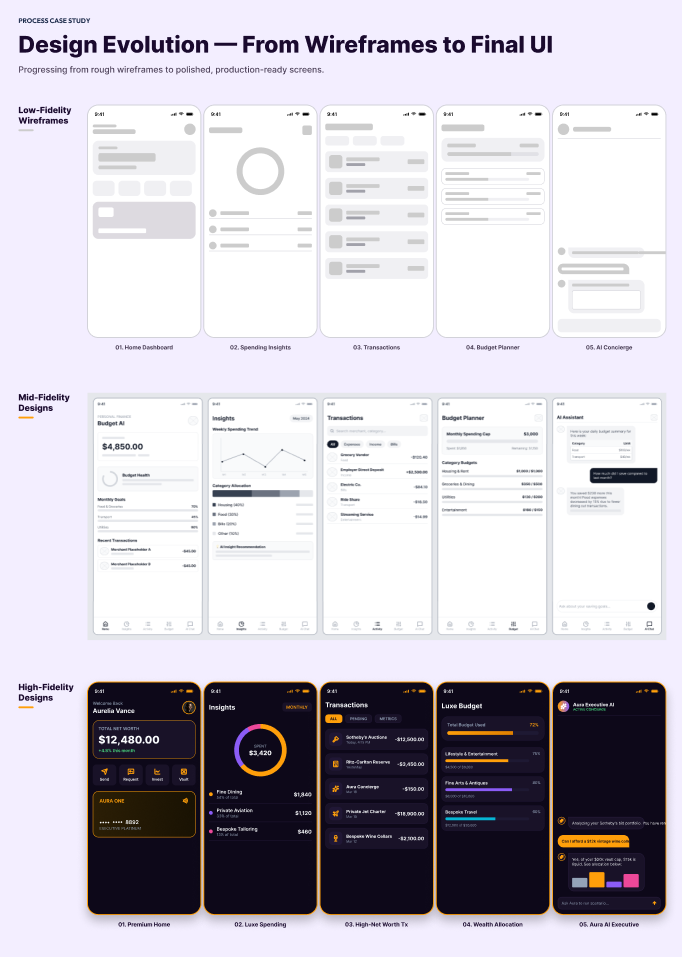
9:41

Welcome Back
Aurelia Vance

Total Net Worth
$12,480.00
+4.8% this month

Send

Request

Invest

Vault
AURA ONE

•••• •••• 8892
EXECUTIVE PLATINUM

9:41


Aura Executive AI
ACTIVE CONCIERGE

Analyzing your Sotheby's bid portfolio. You have remaining room in your Art & Antiques budget.
Can I afford a $12k vintage wine collection?
Yes, of your $20k vault cap, $15k is liquid. See allocation below:
Ask Aura to run scenario...


9:41
Insights
MONTHLY


SPENT
$3,420

Fine Dining
54% of total
$1,840

Private Aviation
33% of total
$1,120

Bespoke Tailoring
13% of total
$460

Project Overview

Bridging the gap between intent and action.
Budget AI is a comprehensive concept case study focused on redesigning personal wealth tracking. Young professionals face a persistent digital fatigue when trying to track expenses across disparate payment accounts, often defaulting to unmonitored spending habits.
By introducing real-time behavioral insights, category-level risk scoring, and a conversational generative helper, this project explores how a tailored fintech interface can turn anxiety-driven avoidance into proactive financial control.
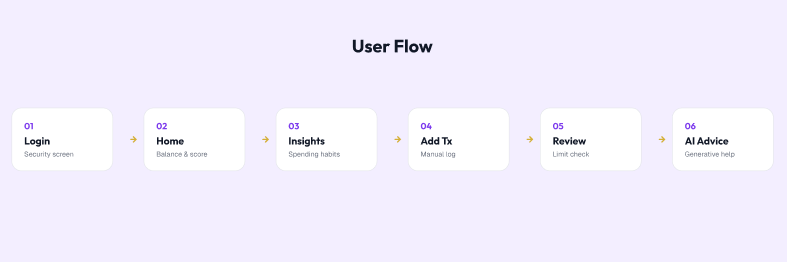
The Design Process

01

Research
8 User Interviews
02
Define
Opportunity Map
03
Ideate
Interface Sketches
04
Design
Figma Prototyping
05
Test
12 Usability Runs
06
Iterate
Visual Refining

Alex Chen
27 · Marketing Coordinator · Toronto

Goals & Needs
• Wants to track automated payments without constant logins. • Needs bite-sized, predictive tips when considering discretionary expenses. • Desires a unified portfolio performance view without complex charts.
Frustrations
• Current banking dashboards are clinical, dense, and backwards-looking. • Manual categorized envelope tracking becomes tedious and is abandoned. • Traditional budgeting guides lack direct connection to transactional apps.
the problem
"I have three banking apps, but I still have no idea where my paycheck goes."
Traditional financial apps operate as historical ledgers—they show what happened in the past but fail to guide future behavior. Young professionals encounter friction with complex, manual setups, leading them to quickly abandon budgeting attempts.
73%
Stress & Anxiety
Of users surveyed reported chronic anxiety regarding daily financial management.
62%
No Budget Tracked
Have abandoned spreadsheet budgets due to friction and manual entry.
45%
Want AI Advisory
Actively seek real-time, automated tips at point of purchase.
Takeaways
Adding AI features to a budgeting app brought up trust issues. People are naturally cautious when an app automatically changes their money.
Early on, people were uncomfortable when the AI gave suggestions without showing how it got there. So I made changes to show where the numbers came from, and added a step where users confirm before anything updates. This made people feel much more in control during the next round of testing.
Key Design Decisions

9:41

Dashboard
Budget Health Score
78 / 100
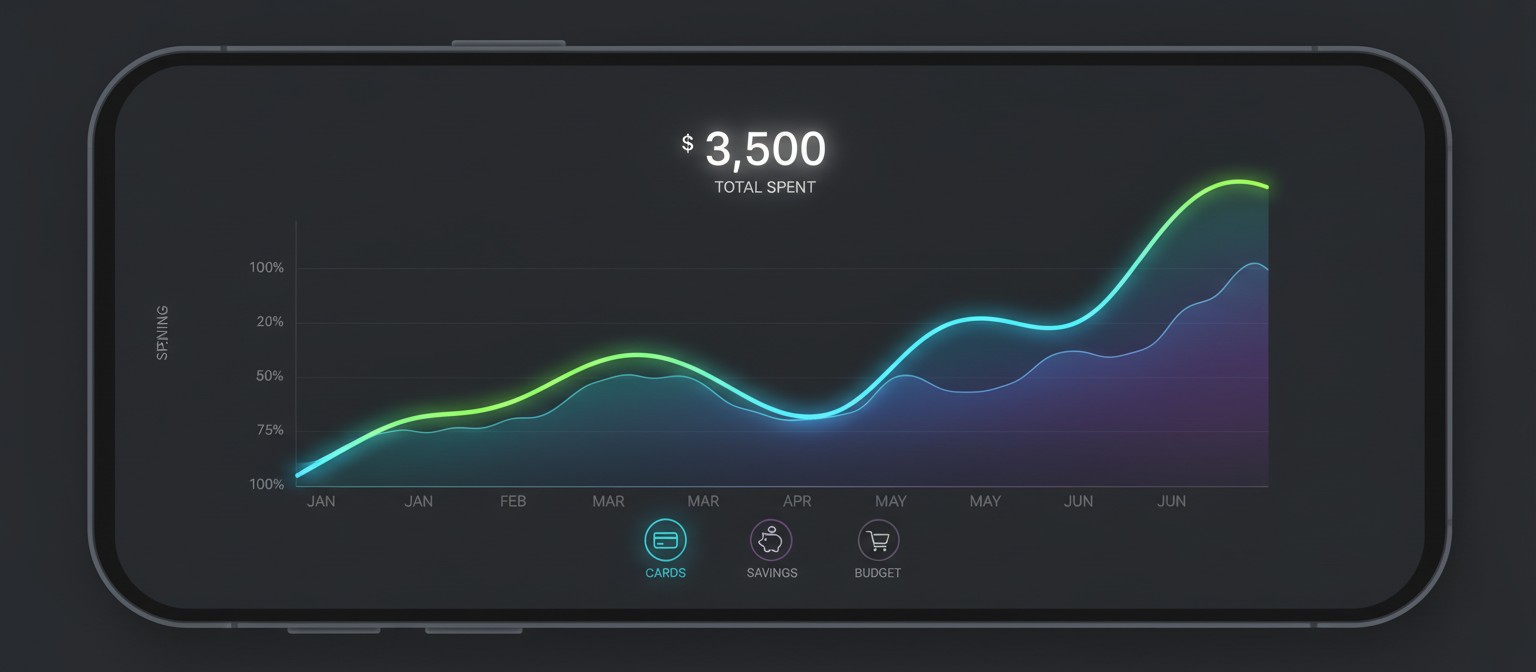
Spending Trends

Home

Spending

Budget

AI
Smart Dashboard
See how you're spending each day at a glance — no more scrolling through long lists of numbers.
9:41
Insights
Dining Out
$245.00

Home

Spending
Budget
AI
Spending Insights
Tags your purchases so unusual spending is easy to spot.
9:41
Budget
Transport Budget
$120 left of $300
Home
Spending

Budget
AI
Budget Planner
Lets you set aside money in simple buckets and gives helpful tips to get back on track if you fall behind on your savings goals.
9:41
Assistant Chat
AI Suggestions Active
Home
Spending
Budget

AI
AI Assistant
Chat with your finances using everyday language. Quickly check spending limits, preview upcoming bills, and see future projections — all in one conversation.